GOOD afternoon I’m tested severe earing loss, working inhumid environment, and first-time user experience,
Im considering phonak Infinio Sphere i90 vs Onicon Intent.
Need help for all the experience user guide me
Thank you in advance.
GOOD afternoon I’m tested severe earing loss, working inhumid environment, and first-time user experience,
Im considering phonak Infinio Sphere i90 vs Onicon Intent.
Need help for all the experience user guide me
Thank you in advance.
I’ve had my i90s for about a month and love them. They are bigger than my previous Windex Evoke, but the functional improvements are worth it
The automatic program switching when moving to different noise situations works very well. Most of the time I don’t notice it, it just works For the first time in a long time I’m now able to understand conversations around a large table in a a noisy restaurant
Thank you your information, my appointment on 29 this month with my audiology.
I have Paradise 90-RT and Audeo 90 Sphere. Never tested the Intent. You have pretty high loss at high frequencies, but probably can’t use the Phonak UP receiver due to relatively good hearing in the lows.
I think much depends on your ear canal characteristics if a Phonak P receiver will give you proper high-frequency gain, as measured by Real Ear Measurement (REM). Sometimes, ear canal volume prevents achieving target gain.
Reportedly, Oticon has better high-frequency amplification, but I haven’t tested it.
Earmolds could be a better option than domes because of the reduced risk of feedback.
I agree. I picked out much more high frequencies sounds with my Oticon over my Phonak Aids.
I might strongly consider ONICON. That is probably a very new and unique brand with very modern features and benefits. Doubt anyone here even has heard of it, it is so new. I must confess that I have not. Please tell me more about it and what the name itself means ? Seriously.
Oh - wait. Perhaps you mean OTICON.
I actually did a trial of both the Philips 9050 which most agree is identical to the Intent. Or at least that is the intent.
I liked the Philips App for the phone far better.
But in the end, I found the power, and clarity of the speech in Sphere, worth the increased cost of the Phonak over the Philips sold at Costco.
I will soon myself have a profound hearing loss and in my side by side noisy restaurant comparison, where I was swapping between the hearing aids frequently, I found that understanding my friend seated across from me, was pretty good with the Philips, the Phonak gave me much greater clarity when I engaged persons at the next table, or hearing the conversations there. ALSO the Phonak has the Roger On microphones which are a benefit. You can get them on eBay at fractional prices.
Also, as I do my own programming, while the Philips software seemed easier, the Phonak I found has greater depth.
I had a bad experience with Oticon. It doesn’t mean that everyone does. Two pairs of new hearing aids (a right XCeed 1 UP hearing aid plus CROS) that rebooted randomly. Neither of which worked well. The reboot issues continued to get worse and worse. And they disconnected on trips to Costco on full batteries. Even the rechargeable loaners I received while my warranty repair for the first pair was replaced had the rebooting issue.
I would strongly suggest making sure that your return period is closely observed, and return them at the soonest opportunity something is wrong. Because it could mean further issues down the line if you keep them.
Oticon are not made or tested well, in my experience, if two brand new sets of aids in a row have this massive reboot and disconnect issue.
If I had known what was going on and what the reboot issue was, I would have returned mine immediately. I did not know what I was experiencing during the first 90 day return period.
By comparison, I have never experienced a single reboot or disconnect issue with Phonak. So, I am glad I went back to my Phonak NAIDA B90 UP plus CROS.
Onicon is the onion archetype of Oticon. Opticon is the optical archetype of Oticon. Sinia is the sin archetype of Signia. Nadia is the Russian name of Naida mermaid. ![]()
I’ve had both. The Oticon intents were great when my hearing loss was slightly less. Now that I’m into severe/profound loss the Phonaks work better. They don’t sound as good, and don’t work as seamlessly but they make speech clearer.
Which Phonak hearing aid do you have, @marnold?
Sphere 90 with ultra power receivers
An earmold with a how large diameter? 0.6 or 0.8 mm?
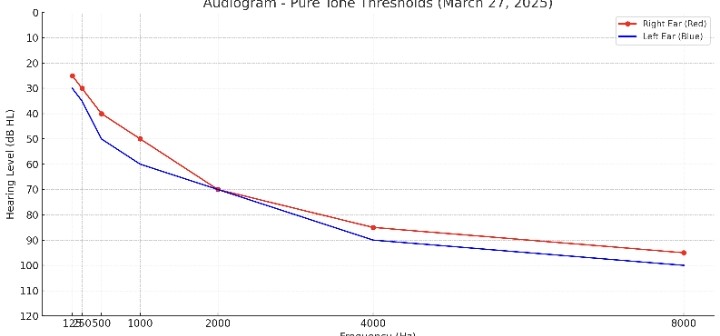
I recently tested the Phonak Sphere 90 and am currently testing the Oticon Intent 1. I’m currently using the Phonak Marvel.
In summary, as others have mentioned, both devices have distinct sound characteristics. Their strengths and weaknesses depend on individual hearing loss, usage habits, and environments. However, there’s no denying that both are excellent products.
Below, I’ll first list my personal experience testing the Phonak Sphere 90. The test was conducted at a designated Phonak fitting center, so I assume the audiologist was trained and qualified.
1/ In Sphere mode, it’s hard to discern the directionality of sounds. I often had to look around to locate the sound source.
2/ Even in very noisy environments, Sphere mode mode genuinely allows you to hear conversations from a distance! I once heard a conversation (albeit intermittently) from passengers in another subway carriage in an extremely crowded and noisy subway environment!
3/ If there are simultaneous announcements, conversations, or TV ads in the carriage, Sphere mode may jump between different conversations, which significantly impacts comprehension. Narrowing the Beam width setting in Sphere mode doesn’t seem to help much.
4/ In Sphere mode, I sometimes experienced one hearing aid not picking up conversation sounds, or the left and right ears receiving different conversations. It seems Sphere mode doesn’t rebalance sounds coming from both directions simultaneously. Instead, it crudely amplifies and denoises conversations from the left in the left hearing aid, while the right hearing aid focuses on voices from the right, suppressing the left-side conversation to a very low level. Worse still, as mentioned in point 3, the directivity setting in Sphere mode doesn’t seem to work effectively.
5/ In certain situations, Sphere truly delivers effects similar to its promotional audio clips! When it detects a conversation that needs amplification, it can sometimes completely eliminate the sound of other conversations! Of course, this assumes the conversation is the one you want to hear.
6/ Sphere is more effective at reducing noise for human voices. Personally, I found its noise reduction for metallic clanging, subway mechanical noises, and non-human or non-natural environmental sounds less impressive. P.S. I tested with a closed mold and no vent hole.
7/ In quiet environments, Sphere mode performs surprisingly well. I tested it in a quiet restaurant where a friend deliberately spoke softly, and I was amazed that I could hear her without her needing to speak directly into my ear (for normal hearing standards). In contrast, the speech enhancer provided by Sphere 90 didn’t seem to contribute much.
8/ Not sure if it’s due to a lack of fine-tuning, but in Sphere mode, the tail ends of words in conversations feel cut off, and it seems like the syllables of each word are shortened. (I’m a Chinese speaker, and Chinese is a tonal language, so this affects comprehension of Chinese conversations to some extent.)
9/ Phone connectivity: Compared to my Marvel 50, the stability and transmission distance have improved significantly. However, the hands-free issue remains unresolved. The audiologist informed me that there’s no option to use Sphere mode’s noise reduction to reduce background noise on my end during phone calls.
Supplement to poont 8, may be a gimmick, or perhaps Phonak is aware of the issue. The Phonak Sphere marketing leaflet in mainland China mentions that the 2025 version of Phonak Sphere sold in China is optimized for the Chinese language (DNN feature and APD 3.0). The version I tested was the standard international version.
I’m currently testing the Intent. Compared to the Phonak Sphere 90, it’s hard to conclude which is more suitable for me at this stage. When DNN is active, both products exhibit the issue mentioned in point 8. (The Intent feels less pronounced, possibly because I can’t adjust its noise reduction strength or because the Intent has a softer sound quality.)
Finally, thank you to everyone who provided feedback on my earlier post!
I admit that during my first interaction with Phonak, I misspelled “Nadia” instead of “Naida” for quite some time. ![]()
Did you have REM-based fitting with “NAL-NL2 Tonal” targets?
According to the Phonak whitepaper (p. 7), they included different languages for DNN training:
In genie, there is a way to change the language to tonal. It should help with your issue.
If im not mistaken its under personalization.
Thx all for the comment.
I don’t know, the audiologist didn’t tell me what fitting formula he used. As I returned the aid already I have no way to ask the audiologist to try it. Phonak mentioned in the marketing leaflet at China " DNN is optimized with Mandarin in year 2025 version". So I just wonder if my problem is related to tonal language…
After testing Oticon Intent, I seem to have found the culprit: I told the oticon audiologist that the sound between syllables is sometimes shortened like Phonak under noisy environment ( although it doesn’t feel as strong as phonak, which may be related to the softer sound of intent). He changed the settings (or fitting formula?) and then switched from M receiver to P receiver, and the sound was immediately improved. The audiologist suggested that I use P receiver: My initial tuning is close to the head room of some frequencies of M receiver. Unfortunately, the 90 degree bend of oticon’s P receiver near the eartips is more prominent, and the wire can be clearly seen from the front. The audiologist told me that even if he used a custom mold, he was not sure that the wire would be as close to the face shape as the M receiver…
Maybe my hearing loss is relatively flat. Just like @JordanK mentioned in his Sphere review, the sound was completely different after audiologist changed the power receiver. But the power receiver of oticon sticks out too much…
At the same time I wanted to ask some advice from other sphere’s users: Is there any way to prevent or reduce the hearing aids from jumping back and forth between different sounds in sphere mode? Narrowing beamforming in Sphere mode doesn’t seem to work very well.
Thanks for the in depth review. I think this would be a deal breaker for me.
You aren’t alone on this. The Facebook groups are full of Nadias ![]()